
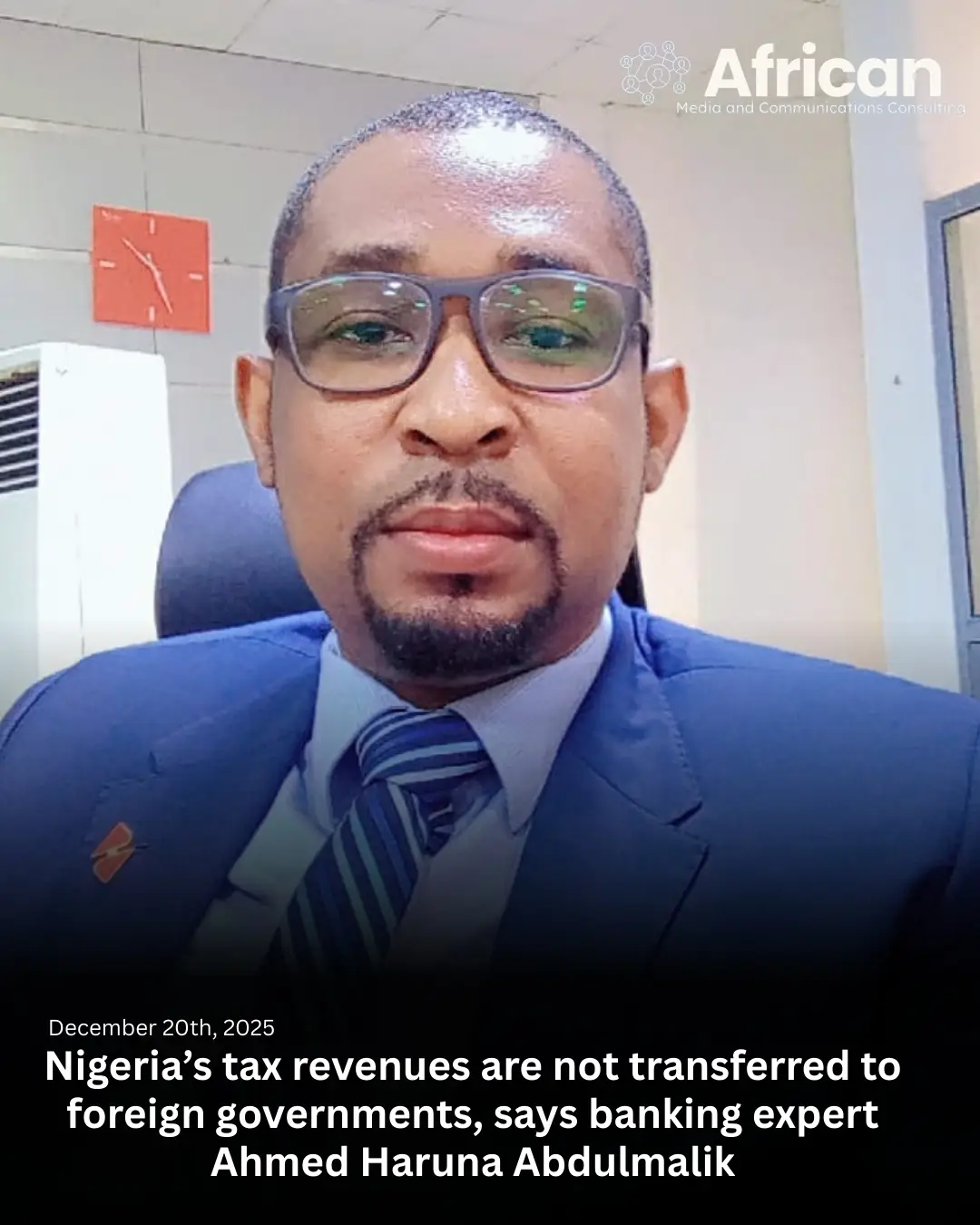
Nigeria’s tax revenues are not transferred to foreign governments. This was the key message from seasoned banking professional Mr. Ahmed Haruna Abdulmalik, who recently addressed widespread misconceptions about taxation in Nigeria and provided expert insights into how the country’s tax system operates.
Mr. Abdulmalik explained that Nigeria operates a federated tax system in which tax administration and collection are shared among the federal, state, and local governments, each with clearly defined responsibilities under the law.
He outlined key taxes that individuals and businesses should understand, including Personal Income Tax paid by individuals and administered by state governments, Company Income Tax paid by registered companies to the Federal Government, Value Added Tax on goods and services, Customs and Excise Duties on imports and certain locally manufactured goods, as well as Withholding Tax, Capital Gains Tax, Stamp Duties, and others. He noted that while Nigeria’s tax structure is similar to those of many African countries, it underperforms in revenue generation due to a narrow tax base, a large informal sector, and weak compliance, resulting in a tax-to-GDP ratio far below that of countries such as South Africa, Kenya, and Morocco.
According to Mr. Abdulmalik, taxes remain the primary means through which governments fund public goods and services. For Nigerian citizens, tax revenues are intended to support improved infrastructure, better healthcare and education, enhanced security, and social services. He acknowledged that many Nigerians feel these benefits are not always visible but stressed that this challenge is more about governance efficiency, transparency, and accountability than taxation itself. Where tax revenues are responsibly managed, he said, citizens are more likely to experience real improvements in their daily lives.
Addressing claims that Nigerian tax policies disproportionately benefit foreign countries, particularly France, Mr. Abdulmalik explained that such perceptions often arise from misunderstandings surrounding Double Taxation Agreements and foreign investment incentives. These arrangements, which Nigeria maintains with several countries, are standard international practices designed to prevent double taxation and encourage investment, technology transfer, and job creation. He emphasized that these policies do not mean Nigeria’s taxes are funding other nations, while adding that government must continually review such agreements to ensure they deliver meaningful benefits to Nigerians.
Mr. Abdulmalik also identified low public trust in government, limited awareness of tax obligations, the dominance of the informal sector, and historically weak enforcement mechanisms as key factors behind low tax compliance in Nigeria. He stressed that improving compliance requires education, fairness, transparency, and visible service delivery. He highlighted the role of the media in simplifying tax information, countering misinformation, and building trust between citizens and government.
Looking to the future, he noted that Nigeria is currently implementing tax reforms focused on expanding the tax base rather than increasing tax rates, leveraging technology to improve efficiency, reducing the burden on low-income earners and small businesses, and strengthening accountability in revenue usage. If sustained, these reforms, he said, will help create a fairer, more efficient, and more inclusive tax system that supports economic growth while protecting citizens.
In conclusion, Mr. Abdulmalik described taxation as a social contract between government and the people, emphasizing that its success depends on collaboration among public institutions, businesses, citizens, and the media. With better communication, transparency, and accountability, he said, taxation can become a true driver of national development.
Ahmed Haruna Abdulmalik is an experienced banking professional with extensive experience across Nigeria’s financial services sector, including core banking operations, risk management, compliance, revenue generation, and financial controls. His deep exposure to regulatory frameworks governing taxation and public finance positions him as a credible voice on tax reforms, fiscal responsibility, and sustainable economic development in Nigeria.
How can accurate tax information change public trust and compliance in Nigeria?
#TaxFacts #NigeriaDevelopment #InformedCitizens









Leave a Reply